
HATCH COFFEE ROASTERS
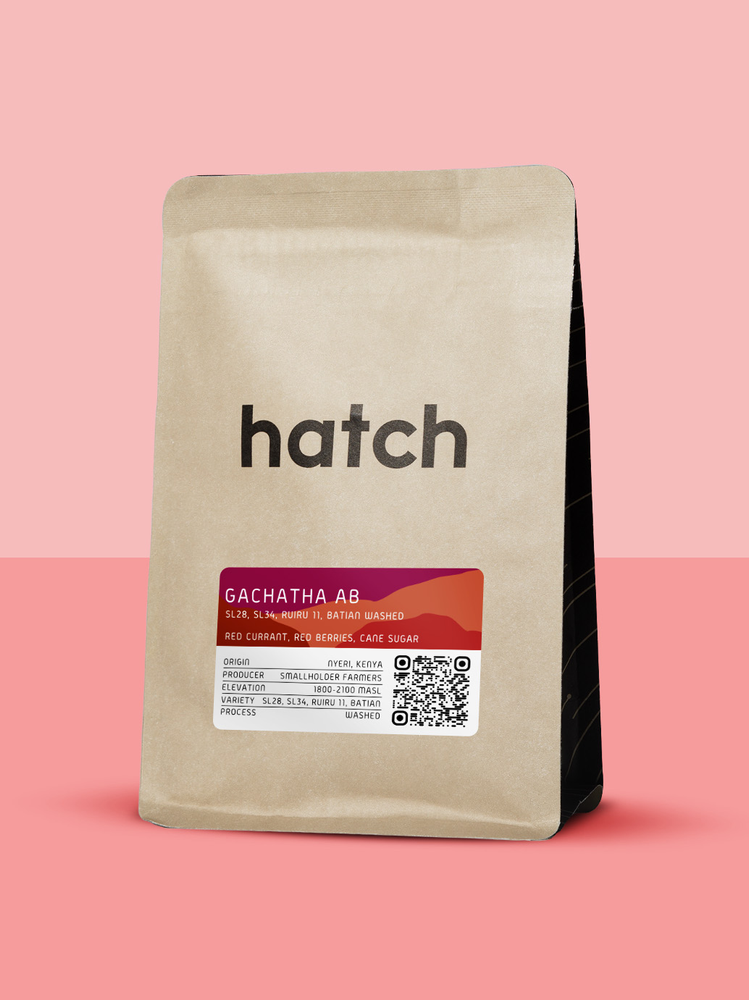
HATCH - Gachatha AB | Kenya - Washed - SL28, SL34, Ruiru 11, Batian
HATCH - Gachatha AB | Kenya - Washed - SL28, SL34, Ruiru 11, Batian
 Origin: Kenya
 Tasting Notes: Red Currant, Red Berries, Cane Sugar

 Process: Washed
 Varieties: SL28, SL34, Ruiru 11, Batian
 Producer: Ruthaka FCS
 Nyeri
Nyeri
 Elevation: 1800 - 2100 masl
 Harvest: 2025/26
 Espresso and Filter
 Roast Date:
Couldn't load pickup availability
Hatch Coffee Roasters is located in Markham, Ontario, Canada
From HATCH
From Falcon Coffees:
“Sourced from the Nyeri region in Central Kenya, this coffee is produced at Gachatha Factory, a washing station located in Karundu within Tetu Subcounty on the slopes of the Aberdare Range. The area’s fertile volcanic soils and elevated terrain—ranging between 1,800 and 2,100 meters above sea level—provide ideal conditions for cultivating high-quality Arabica coffee.
Established in 1963, the same year Kenya gained independence, Gachatha Factory has long been a part of the country’s coffee heritage. Originally operating under the Giant Tetu Farmers’ Cooperative, it became independent in 1999 with the formation of the Gachatha Farmers’ Cooperative Society. Today, the cooperative brings together more than 1,500 active smallholder farmers, each contributing carefully grown coffee cherries from small plots of land. These producers are encouraged to adopt sustainable agricultural practices that minimize environmental impact while preserving quality.
The coffee is composed of a blend of well-known Kenyan varieties, including SL28, SL34, Ruiru 11,
SL28, originally selected in the 1930s, is especially valued for its drought tolerance and complex, sweet profile with wine-like undertones. SL34, another historic selection, is admired for its rich body and balanced acidity, though it requires careful management due to its susceptibility to disease.
Ruiru 11 offers high yields and strong disease resistance.
Processing at Gachatha follows the fully washed method, a technique that emphasizes clarity and precision in the final cup. After being handpicked at peak ripeness, cherries are delivered to the factory, where they are sorted to remove defects before pulping. The beans, still coated in mucilage, are then fermented in concrete tanks for 12 to 24 hours, depending on temperature conditions. Following fermentation, they are thoroughly washed in fresh water—often sourced from nearby rivers—and may be soaked for up to 24 hours during peak harvest periods. This additional soaking step is believed to enhance the coffee’s brightness and overall cleanliness.
Drying takes place on raised beds, where the parchment is spread evenly and turned regularly to ensure consistent moisture reduction. Workers carefully manage exposure to sun and shade, covering the coffee during the hottest hours and protecting it at night. Depending on weather conditions, drying can take anywhere from 5 to 21 days before the coffee is fully stabilized and ready for milling”