
NOMAD COFFEE
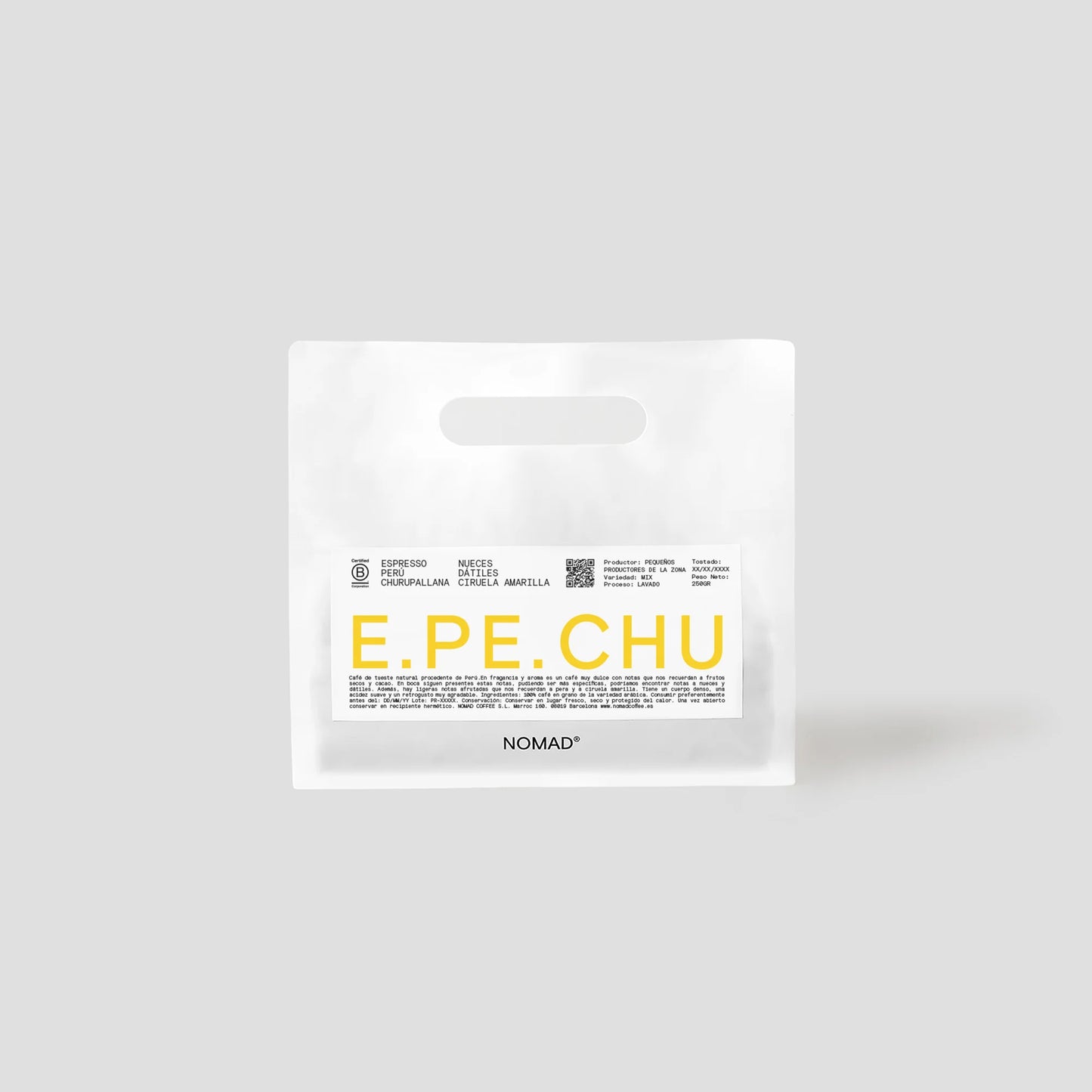
NOMAD - Churupallana {Espresso} | Peru - Washed - Blend
NOMAD - Churupallana {Espresso} | Peru - Washed - Blend
 Origin: Peru
 Tasting Notes: Walnuts, Dates, Yellow Plum

 Process: Washed
 Varieties: Blend
 Elevation: 1800 - 2000 masl
 Harvest: 2025/26
 Recommended Brew: Espresso
 Roast Date:
Couldn't load pickup availability
NOMAD Coffee Roasters is located in Barcelona, Spain
From NOMAD
In terms of aroma and flavor, this is a very sweet coffee with notes reminiscent of nuts and cocoa. These notes are still present on the palate; to be more specific, we can detect hints of walnuts and dates. There are also subtle fruity notes reminiscent of pear and yellow plum. It has a full body, mild acidity, and a very pleasant aftertaste.
Monobamba derives from the Quechua words "Munay" (love or desire) and "Bamba" (vast plain), which together mean "Plain of Desire." This name reflects the landscapes and the unique quality of the coffee grown in the region.
The Monobamba ecosystem, known as "Ceja de Selva," is where the high Amazon rainforest meets the Andes. The farms are located between 1,800 and 2,000 meters in elevation, though some plots reach 2,200 meters. These geographical characteristics impart sweet and complex flavors to the region’s coffee.
Since 2016, the importer Cultivar has collaborated with the valley’s communities to improve coffee quality through advanced post-harvest techniques. This project, led by Lisanne, CEO of Cultivar, began following the devastating rust attacks of 2012–2013. Local producers have invested time and effort into renovating their farms, achieving consistent production of high-quality coffees.
Dula Julcarima, one of the first certified Q-Graders in Peru, joined the Cultivar team as the regional quality coordinator. Her expertise and connection to Monobamba have driven the production of exceptionally sweet and clean coffees through extended fermentation experiments.
Process Coffee cherries are selectively harvested when ripe. They are then pulped and fermented in concrete tanks for approximately 18 hours. The coffee is then washed with clean water and dried on raised African beds, ensuring a uniform and controlled process that highlights the quality of the bean.